






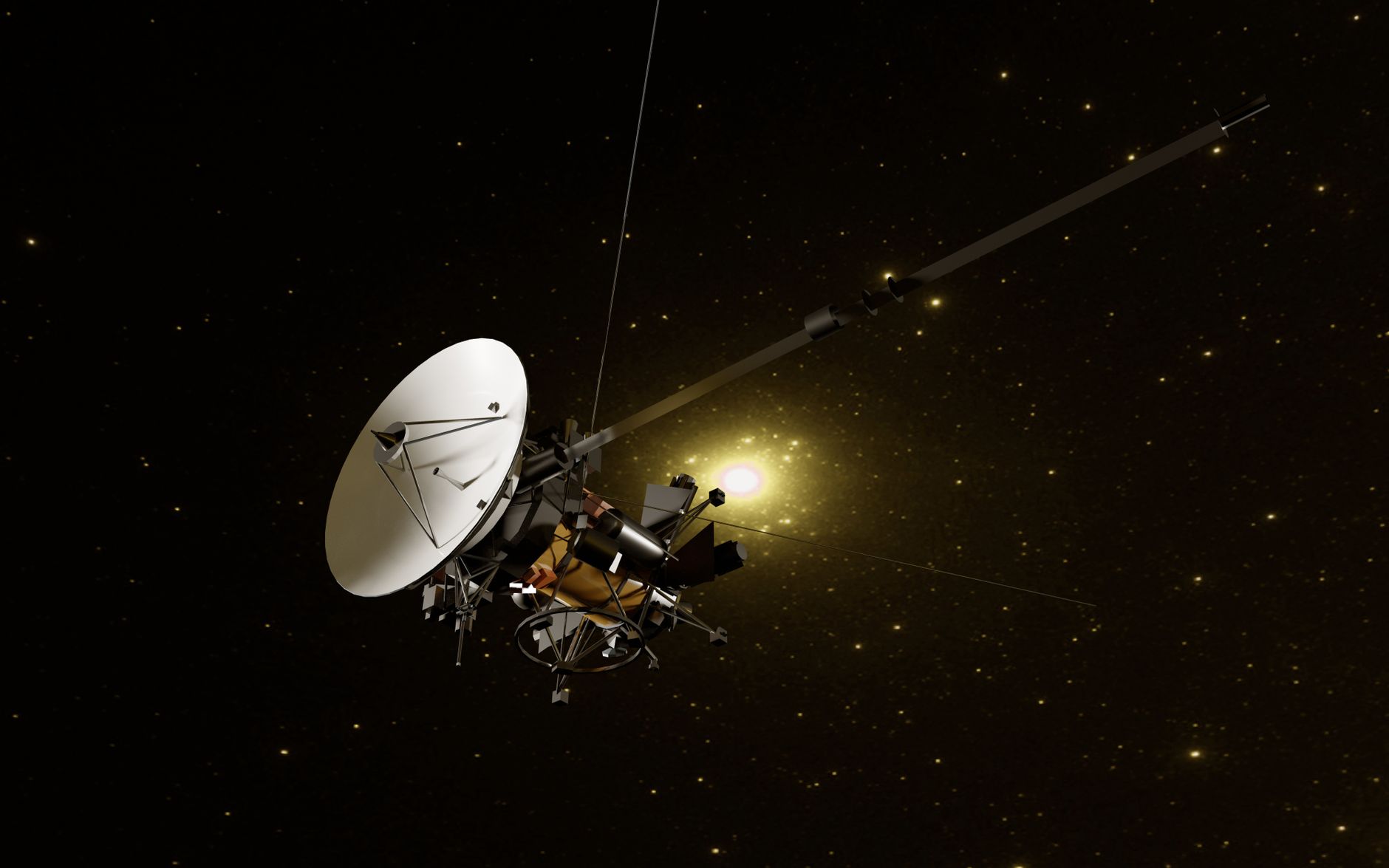
Voyager 1 light day marks a significant achievement in space exploration. As it approaches this cosmic milestone, scientists are eager to understand its implications for our knowledge of the universe.
What is Voyager 1’s light day?
Voyager 1, launched in 1977, has long been a pioneer in space exploration. As it travels further into the cosmos, it is set to achieve a remarkable milestone: reaching one light day from Earth. A light day is the distance that light travels in one day, approximately 26 billion miles or 40 billion kilometers. This achievement signifies Voyager 1 will be located at a distance where the speed of light takes a full day to reach us.
The significance of this milestone cannot be overstated. It represents a tangible measure of how far humanity has ventured into the universe. As of now, Voyager 1 is already the farthest human-made object from our planet. Achieving a light day distance will mark a new chapter in its journey and deepen our understanding of the vastness of space.
In addition to its scientific contributions, Voyager 1’s journey serves as a symbol of human curiosity and ambition. As it continues to send back data from the outer reaches of our solar system, it inspires future generations to look beyond our own planet.
The journey of Voyager 1
Launched on September 5, 1977, Voyager 1 has traveled farther than any human-made object in history. Its primary mission was to explore the outer planets, but it has continued its journey into interstellar space, gathering invaluable data along the way. As it approaches a significant milestone, the spacecraft is now just one light day away from Earth. This distance, roughly 8.5 billion miles, allows for a unique perspective on our solar system.
Over the years, Voyager 1 has sent back stunning images and groundbreaking scientific findings, including details about Jupiter’s moons and Saturn’s rings. As it ventures beyond the influence of our sun, researchers are eager to learn more about the interstellar medium it now traverses.
Its journey symbolizes human curiosity and determination. As it reaches this light day milestone, scientists reflect on the legacy of Voyager 1, considering how this extraordinary spacecraft has expanded our understanding of the cosmos. With each passing moment, it continues to send back data, reminding us of the vastness and mysteries of space.
Significance of Voyager 1’s milestone
The achievement of Voyager 1 reaching its first light day from Earth represents a remarkable milestone in human exploration of the cosmos. This distance, approximately 8.3 billion kilometers, underscores the immense scale of our solar system and the challenges posed by deep space travel. Voyager 1, launched in 1977, has provided invaluable data about the outer planets and the heliosphere, contributing significantly to our understanding of space.
As it ventures further into interstellar space, the significance of Voyager 1’s light day becomes increasingly apparent. This accomplishment is not merely about distance; it symbolizes humanity’s relentless pursuit of knowledge and exploration. Voyager 1 serves as a testament to scientific innovation, showcasing how far we can reach when we push the boundaries of technology and imagination.
- Exploration: Voyager 1 continues to send back data, enhancing our knowledge of the universe.
- Innovation: The spacecraft’s technology has paved the way for future missions.
- Legacy: Voyager 1’s achievements inspire future generations of scientists and explorers.
Ultimately, Voyager 1’s light day is a beacon of human achievement in the vastness of space.
Understanding light day in space
To grasp the significance of Voyager 1 reaching a light day from Earth, it is crucial to understand the concept of a light day. A light day is the distance that light travels in one day, which is approximately 26 billion miles or 40 billion kilometers. This vast measurement highlights the immense scale of our universe and the remarkable distances involved in space exploration.
When we consider that light travels at a speed of about 186,282 miles per second (299,792 kilometers per second), it becomes easier to appreciate the magnitude of this achievement. Achieving a light day means that Voyager 1 is now over a day’s worth of light travel away from our planet, marking it as the first human-made object to reach this distance.
This milestone not only emphasizes the technological advancements that allow us to send spacecraft so far into the cosmos but also serves as a reminder of how far Voyager 1 has journeyed since its launch in 1977. As it continues to send back data, the implications of reaching a light day will be felt in the scientific community for years to come.
Future of Voyager 1
The future of Voyager 1 holds exciting possibilities as it continues its journey through the cosmos. Having recently achieved the remarkable milestone of one light day from Earth, this spacecraft is not only a testament to human ingenuity but also a beacon of knowledge about our universe.
As Voyager 1 travels farther from our home planet, it is expected to encounter various cosmic phenomena, including:
- Interstellar Medium: The region of space filled with gas and dust that exists between star systems.
- Cosmic Rays: High-energy particles that can provide insight into the origins of the universe.
- Magnetic Fields: Understanding how these fields interact in deep space could reveal fundamental physics.
In addition to its scientific goals, Voyager 1 serves as a symbol of exploration and curiosity. As it reaches new distances, the data it sends back could enhance our understanding of space and potentially lead to new discoveries. The achievement of one light day signifies not just distance traveled, but also the ongoing quest for knowledge beyond our solar system.
How Voyager 1 communicates
Voyager 1, the farthest human-made object from Earth, communicates with mission control using a complex system of radio waves. As it reaches the milestone of one light day from Earth, maintaining this connection becomes increasingly challenging.
The spacecraft sends data back to Earth via a high-gain antenna that transmits signals at the speed of light. However, as Voyager 1 travels further into interstellar space, the signals take longer to reach us. At one light day, signals take approximately 24 hours to make the round trip.
This delay means that any instructions sent to Voyager 1 require careful planning, as responses to commands will take two days. Despite the distance, the mission team at NASA continues to receive valuable scientific data, including information about cosmic rays and magnetic fields.
To ensure effective communication, the Deep Space Network (DSN) plays a vital role, utilizing large antennas positioned around the globe. These facilities help maintain contact with Voyager 1, allowing it to be a beacon of human exploration even at such vast distances.
Impacts on space exploration
The achievement of Voyager 1 reaching a light day from Earth marks a significant milestone in space exploration, highlighting the capabilities of human ingenuity and technology. This milestone not only demonstrates the distance covered by Voyager 1 but also opens up new avenues for understanding our solar system and beyond.
As Voyager 1 continues its journey through interstellar space, the implications of this light day achievement are profound:
- Technological Advancements: The engineering developments that enabled Voyager 1 to travel such vast distances have implications for future missions, inspiring new spacecraft designs.
- Scientific Research: With Voyager 1 reaching a light day, scientists can gather data that may help answer fundamental questions about cosmic phenomena.
- Public Interest: Milestones like this reignite public fascination with space exploration, potentially leading to increased funding and support for future missions.
Overall, the Voyager 1 light day serves as a reminder of the ongoing journey of exploration and the endless possibilities that lie ahead in the cosmos.
As scientists celebrate the Voyager 1 light day, they reflect on the incredible journey of the spacecraft since its launch in 1977. This milestone, the Voyager 1 light day, marks a significant achievement in our exploration of the cosmos.
Photo by Paul Seling on Pexels