






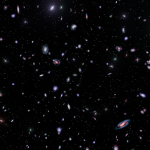


The dark galaxy discovery sheds light on a mysterious starless cloud that may redefine our understanding of galaxy formation in the universe.
What is a Dark Galaxy?
A dark galaxy is a type of astronomical structure that contains little to no stars, making it difficult to detect using traditional observational methods. Instead of shining brightly like galaxies filled with stars, dark galaxies are composed primarily of dark matter and cold gas. These elusive formations provide valuable insights into the universe’s composition and the formation of galaxies.
Recent discoveries have sparked interest in dark galaxies, as they challenge existing theories about galaxy formation and evolution. Researchers are particularly fascinated by the potential existence of these starless clouds, which may hold clues to the early universe.
- Dark galaxies are predominantly made up of dark matter.
- They may help explain the missing mass problem in cosmology.
- Studying dark galaxies can lead to a better understanding of cosmic structures.
The ongoing exploration of dark galaxy discovery promises to reshape our understanding of the cosmos.
The Significance of Starless Clouds
The discovery of dark galaxies, particularly starless clouds, offers significant insights into the universe’s structure and evolution. These galaxies, devoid of visible stars, challenge conventional notions of galaxy formation and composition. Researchers are increasingly focused on understanding these enigmatic formations, as they may contain vast amounts of dark matter and gas.
The implications of studying dark galaxy discovery are profound:
- Understanding Dark Matter: Exploring starless clouds could unveil the nature and distribution of dark matter in the universe.
- Galaxy Formation Theories: Insights from these galaxies may reshape existing theories on how galaxies develop over time.
- Stellar Evolution: They provide a unique perspective on the lifecycle of matter in the cosmos, particularly in the absence of star formation.
Ultimately, the exploration of dark galaxies enhances our grasp of cosmic phenomena that remain largely mysterious.
How Dark Galaxies Challenge Current Theories
The recent dark galaxy discovery has raised critical questions about our understanding of galaxy formation and evolution. Traditionally, galaxies are thought to form through the accumulation of gas and dust, which eventually leads to star formation. However, the existence of starless clouds challenges this theory by presenting a case where galaxies may exist without the stars typically associated with them.
Researchers have identified these dark galaxies as vast regions of hydrogen gas, devoid of luminescent stars, prompting scientists to reconsider the mechanisms that govern galaxy formation. Some key challenges posed by this discovery include:
- The need for revised models: Current theories may not fully account for the existence of dark galaxies.
- Gravitational effects: Understanding how these galaxies interact with their surroundings without visible stars.
- The role of dark matter: Exploring the implications of dark matter in the formation of starless clouds.
Future Research Directions in Astronomy
The discovery of dark galaxies opens up new avenues for future research in astronomy. Scientists are eager to explore several key areas that could enhance our understanding of these enigmatic structures.
First, researchers aim to investigate the formation processes of dark galaxies, particularly how they evolve without visible stars. Understanding the conditions that lead to the emergence of such starless clouds could reveal fundamental insights into galaxy formation.
Second, astronomers are focused on utilizing advanced telescopes to detect more dark galaxies, potentially uncovering a greater population than previously believed. This could reshape our understanding of the universe’s composition.
Lastly, theoretical models will be refined to incorporate the implications of dark galaxy discovery, helping to better explain the dynamics of dark matter and its influence on visible matter. Such advancements may challenge existing paradigms and inspire innovative theories in cosmology.
The dark galaxy discovery has opened new avenues for understanding the nature of starless clouds in our universe. Researchers are now able to link these findings to the formation and evolution of galaxies.
Photo by Emran Omar on Pexels
Sources
Google Universal Cart: Is It the Best Integration Solution? · Chevrolet Trax Safety Features: Best Upgrades for 2027 · Gaonchips joins Arm: A Smart Move for Tech Innovation